johan_u

Projects · 2025 – 2026

Six things I built

A finished object tells you very little about the person who made it. So each of these is written the same way: what the problem actually was, what I got wrong on the first attempt, and the one thing I took away that I still use. The failures are here on purpose — they are where most of the learning sat.

01 · Deployed

Jurnal Lentera Bursa

A trading journal and fee calculator for Indonesian retail investors on the IDX.

September 2026 Independent build DAI MasterClass, "Building AI Products" Sole builder

The problem

An Indonesian retail investor placing a trade cannot easily answer three ordinary questions: what this trade costs once every broker fee is counted, what price the exchange's fraction rules will actually accept, and how far the auto-reject ceiling and floor sit from where the stock is trading today. Most people answer them with a mental estimate and a spreadsheet they update afterwards, if at all. The estimate is usually wrong in the same direction — optimistic.

What I built

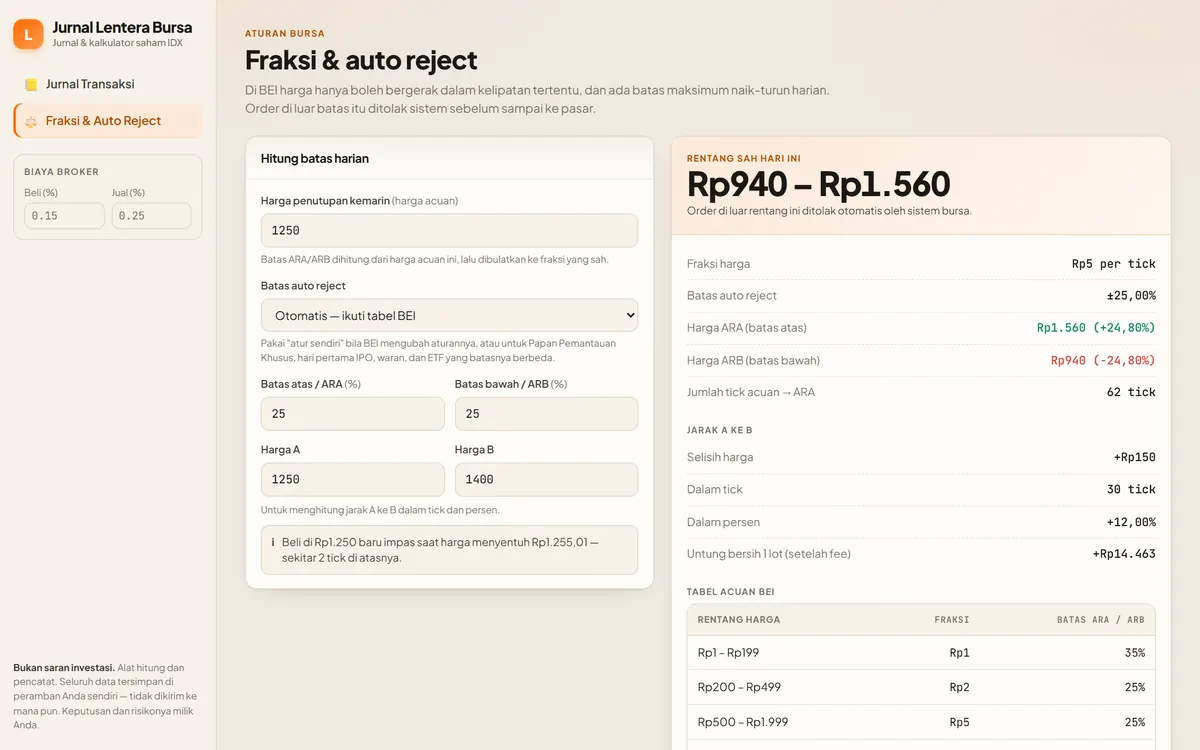
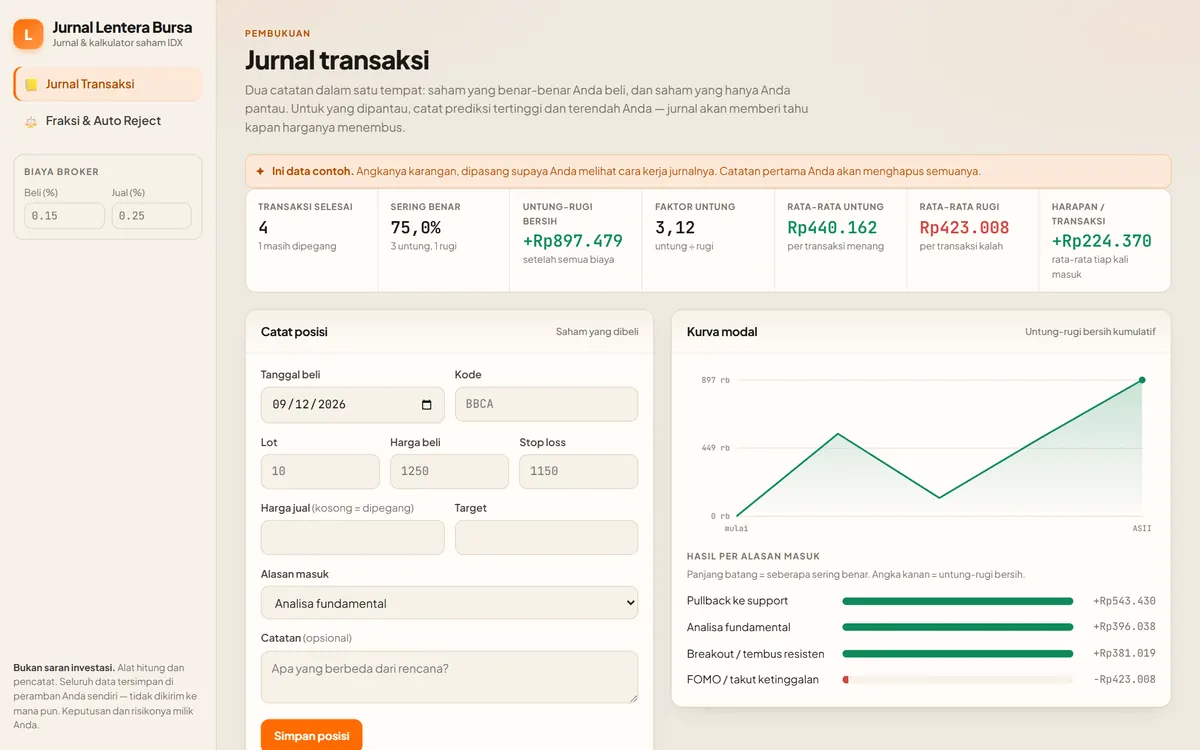
A calculator and journal that computes fee-inclusive profit and loss, snaps prices to the correct exchange fraction, shows the ARA and ARB range, derives the true break-even, and imports and exports a versioned CSV so the record outlives the tool. The journal itself never leaves the browser — it is not something I want sitting on my server, and I would rather design that constraint in than promise it in a privacy policy.

The deployment is gated and token-verified. Error logs are scrubbed so that a stack trace cannot leak a ticker code or a price. Forty-eight tests exist for one purpose: to prove the system refuses things it should refuse — forged signatures, wrong audience, expired tokens, injected journal content, oversized payloads.

What I took away

I directed an AI teammate through this build, and it reported three defects back to me. I read the source and found two of them were not real. Had I trusted the report, I would have "fixed" working code and shipped the one genuine bug untouched. Since then I treat generated output the way I would treat a colleague's pull request: read it, test it, and let the tests — not the confidence of the claim — decide.
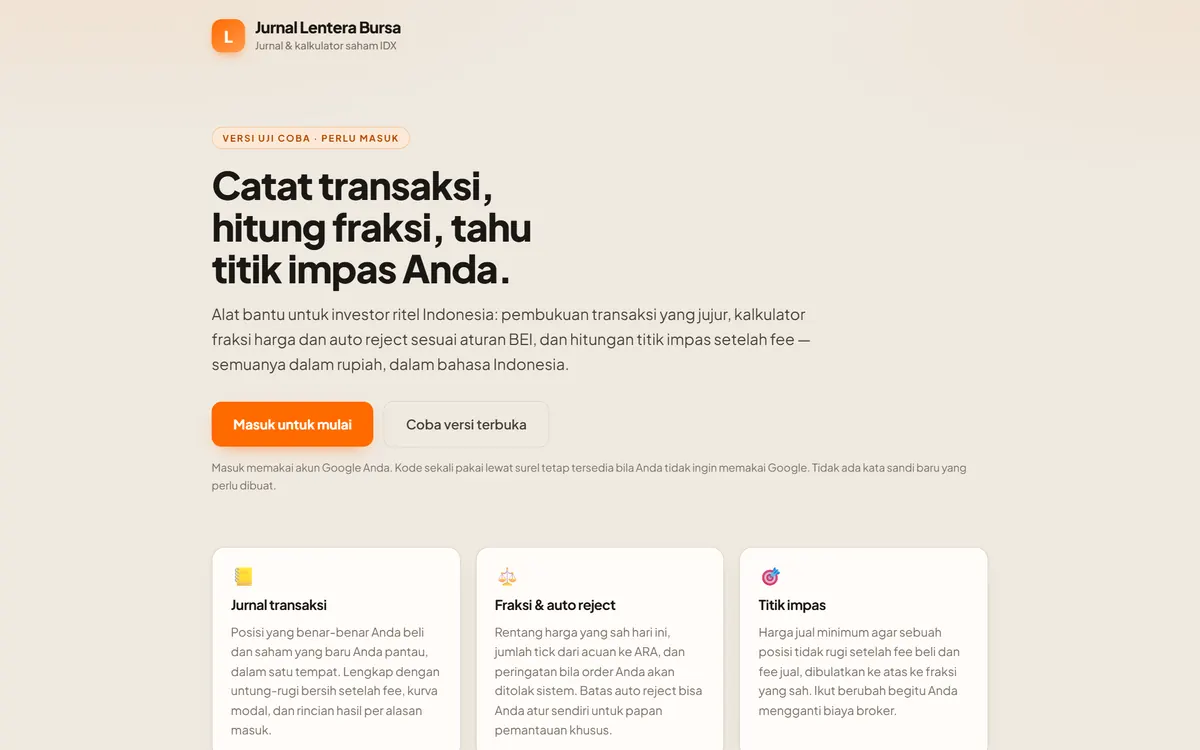
Landing page of Jurnal Lentera Bursa
The gated landing page.
Transaction journal view listing trades
Transaction journal — kept in the browser.
Price fraction and auto-reject calculator
Price fractions and the auto-reject range.
LiveProduct specification 48 testsPrivacy by designAI as teammate

02 · Energy systems

Solar-Powered Doorbell

A doorbell sized to run indefinitely without ever touching mains power.

May – August 2026 10.023 Designing Energy Systems CAD, electronics, testing

The problem

A doorbell draws almost nothing, but it has to draw it forever, and at the least convenient moment — after a week of overcast sky, at night. So the design question is not "will a solar panel run this", it is "what is the worst week this has to survive, and how much battery does that buy me". I sized the photovoltaic panel and the 18650 cell against that worst case rather than against an average.

What I built

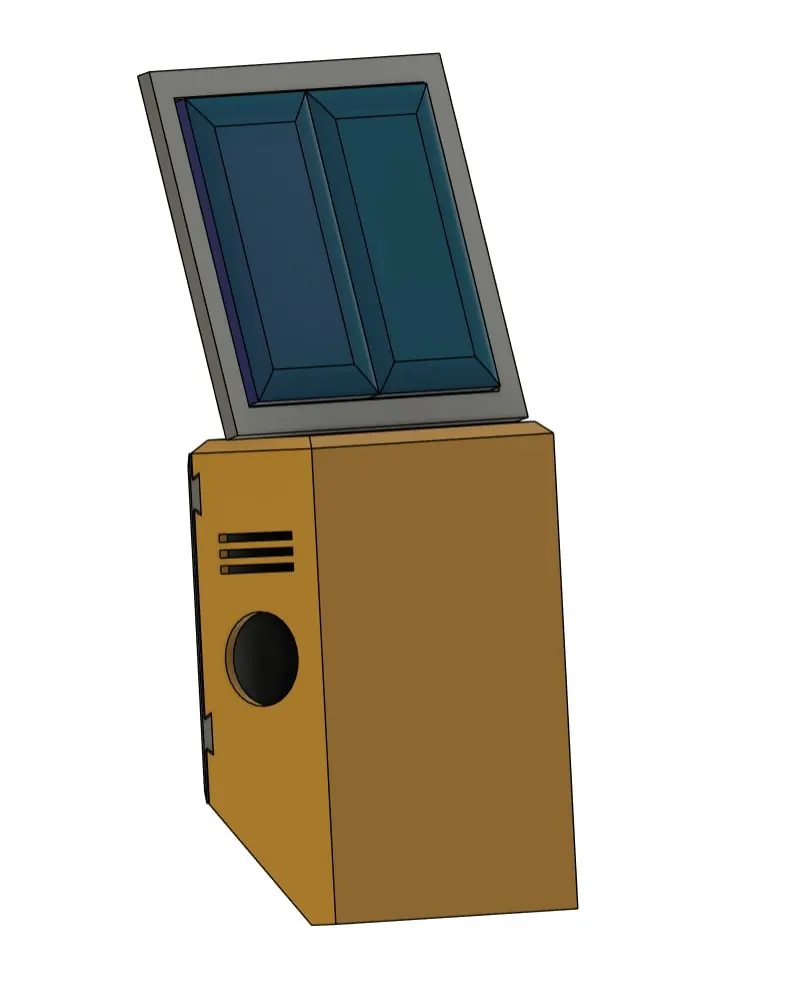
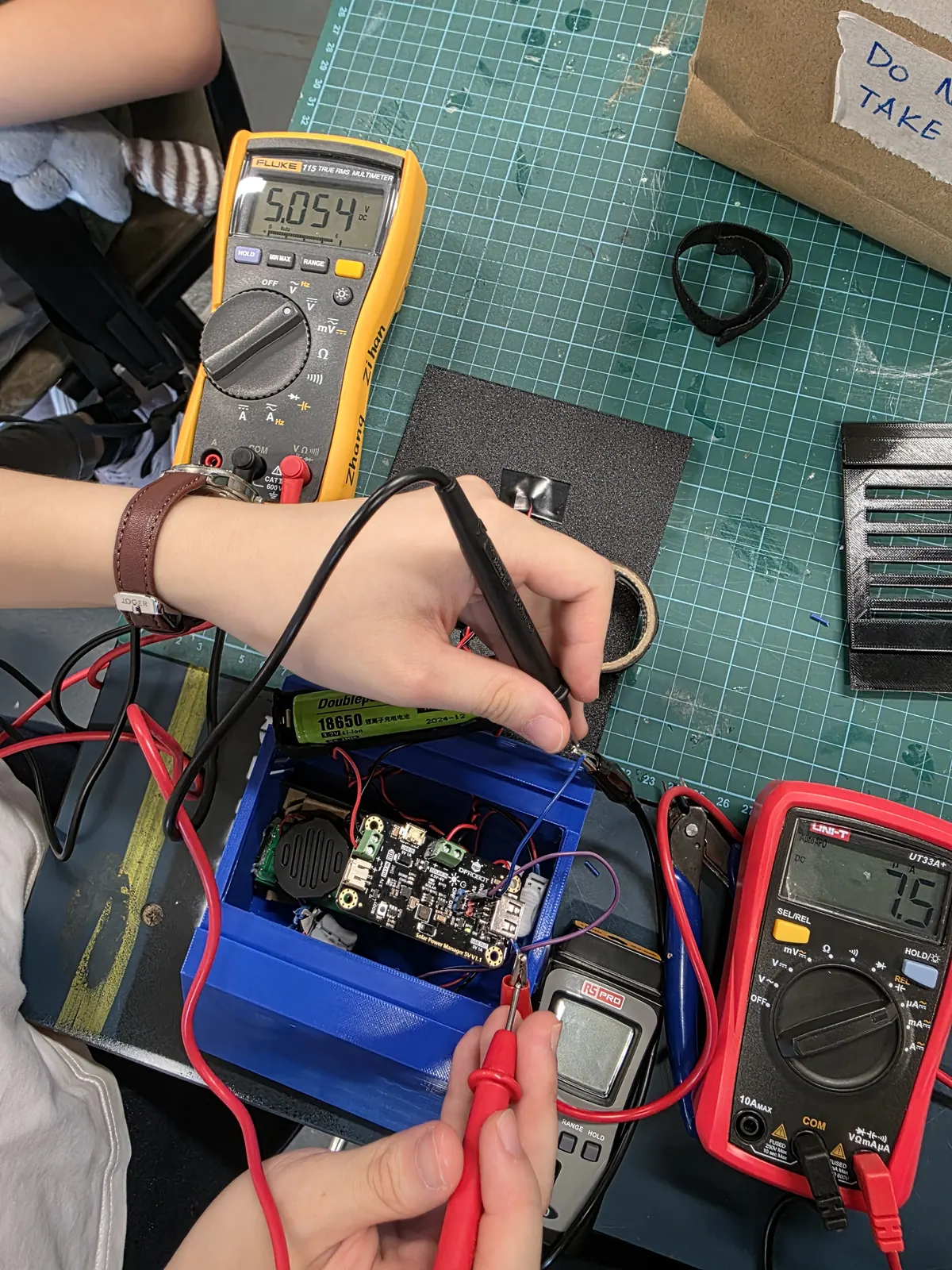
The full CAD set — button housing, receiver enclosure for the PCB, solar panel housing, hinges — and the assembled unit around a solar charge controller, battery, speaker and transmitter pair. Then bench testing with a multimeter to confirm the charge behaviour matched what I had calculated on paper, which is a less satisfying step than it sounds and a more necessary one.

What I took away

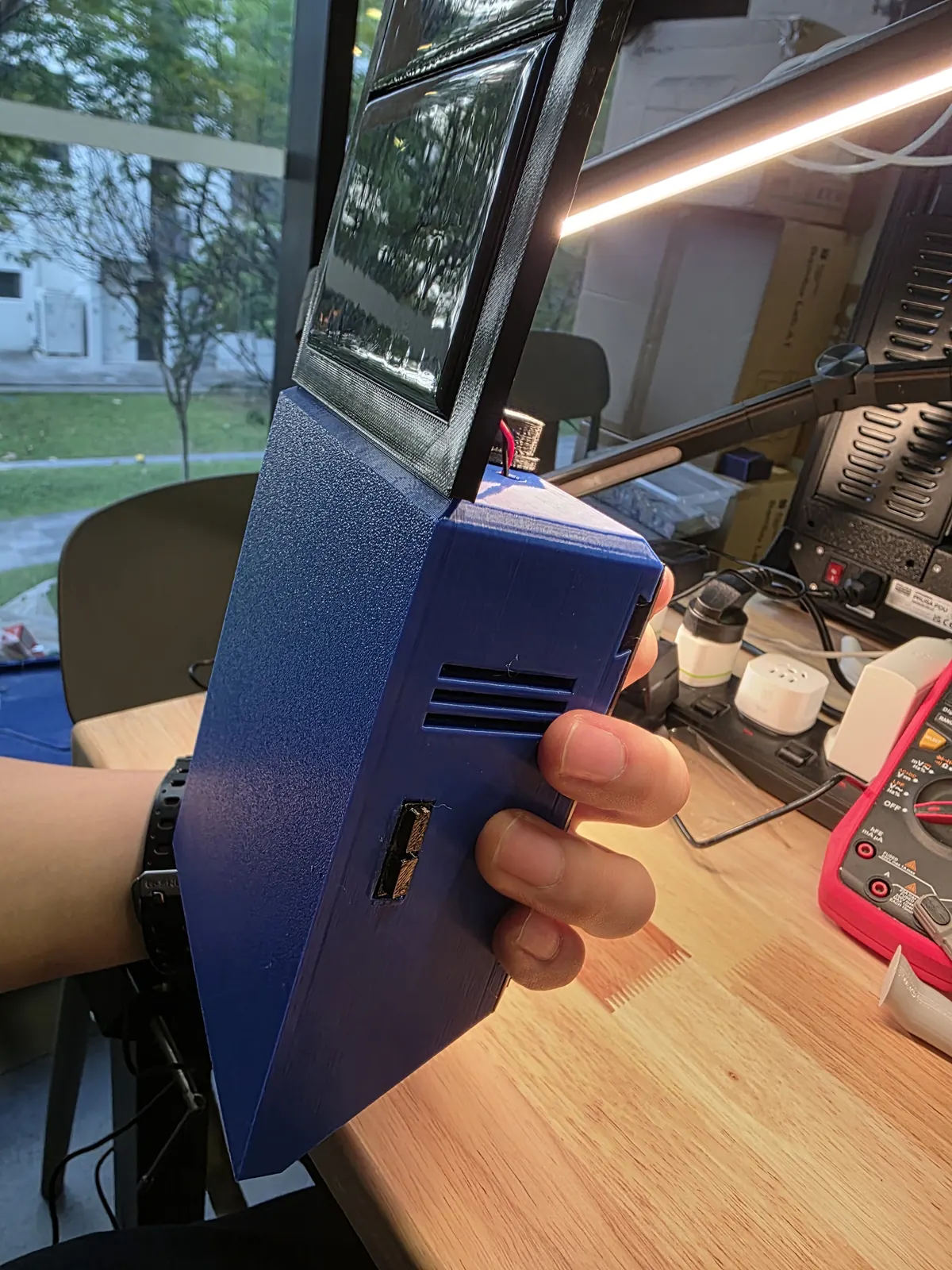
My first enclosure sealed the solar panel flush into the lid. It looked much better and worked much worse: the panel muffled the speaker until the chime barely carried, and with nowhere for heat to go, the electronics sat warm all afternoon. The second version opened vents along the side and gave both the sound and the heat a path out. I had optimised for the render instead of the object, and the object told me so — which is the most useful sentence I can write about this project.

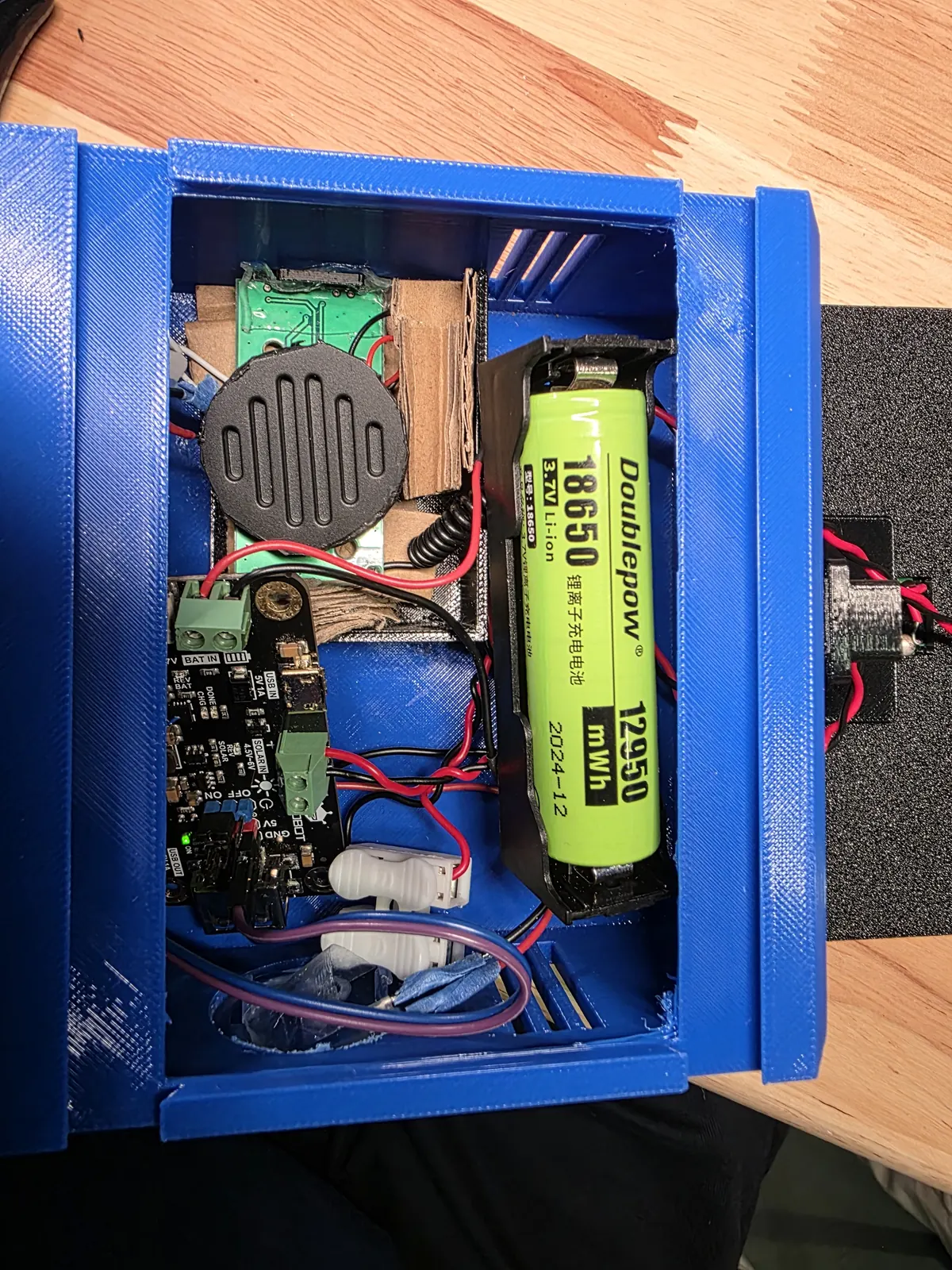
Open blue 3D-printed enclosure showing PCB, 18650 battery, speaker and wiring
Inside the receiver: charge controller, 18650 cell, speaker.
Side of the enclosure showing the ventilation slots added in the second design
Version two — vents for the sound and the heat.
CAD render of the doorbell showing the angled solar panel, side vents and speaker grille
The CAD: panel, vents and speaker in one view.
Multimeter probes on the assembled circuit during bench testing
Bench testing the charge path against the calculation.
Full CAD setPV & battery sizing Iterated after failureBench tested

03 · Global immersion

Konora

A marketplace for Balinese traditional performers, designed on the island itself.

May 2026 DIVE · InnovEnt 2026 with Institut Teknologi Sepuluh Nopember Bali, two weeks Team of four

The problem

Bali received close to seven million foreign arrivals last year and tourism accounts for roughly a third of the province's economy, yet the performers who supply a great deal of what those visitors come to see have no infrastructure at all. Instagram is the discovery layer. WhatsApp is the contract. Cash is the payment processor. There is no registry of performers anywhere in the country, and middlemen take thirty to forty per cent of a fee for closing a gap that a directory would close for free.

What we designed

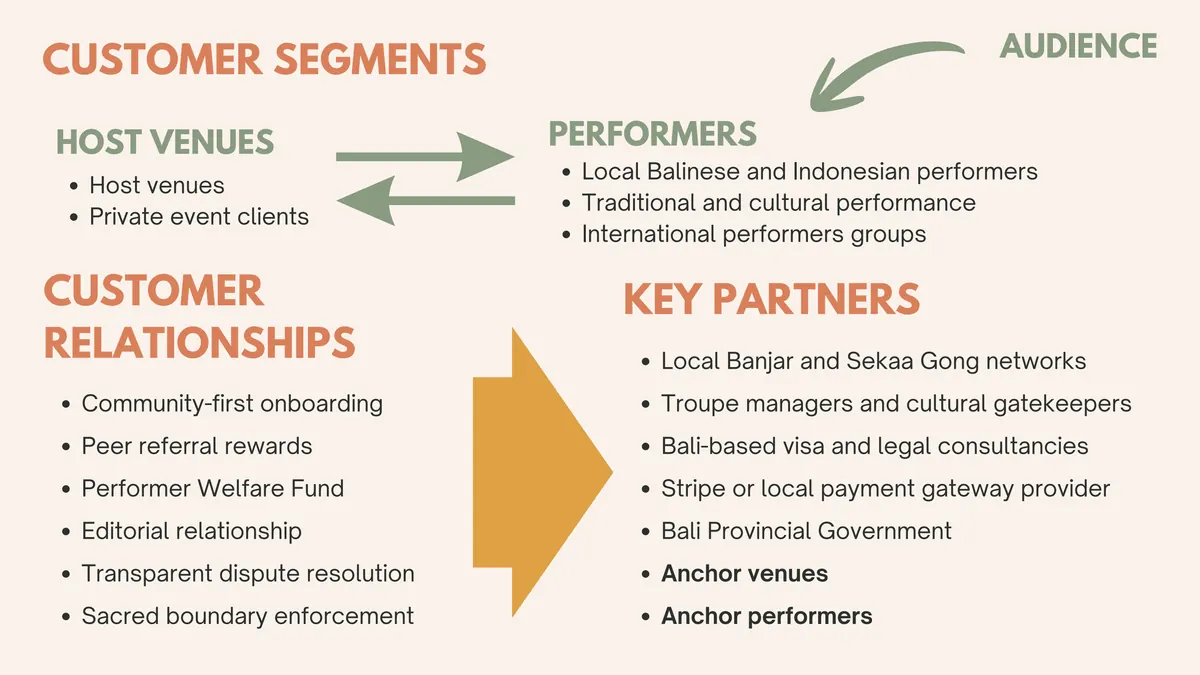
A three-sided marketplace connecting performers, host venues and private event clients, with the commercial model worked through properly: onboarding through the existing Banjar and Sekaa Gong networks rather than around them, a performer welfare fund, transparent dispute resolution — and, the part I argued hardest for, boundaries that performers set themselves. Some pieces are sacred and are not for a hotel lobby. The platform has to be able to encode that refusal, or it becomes another middleman wearing better clothes.

What I took away

I was the bridge on this team, translating Western-framed proposals to my Indonesian groupmates and their reasoning back again — and discovering that I was doing it for a country I thought I already knew. Seeing Indonesia through a visitor's eyes changed which assumptions I trusted. It also taught me that disagreements survive better when they are handled slowly: every dispute we had was settled calmly, and none of them cost us a day.

Business model canvas slide showing customer segments, customer relationships and key partners
Part of our business model canvas — including sacred boundary enforcement as a stated customer relationship.
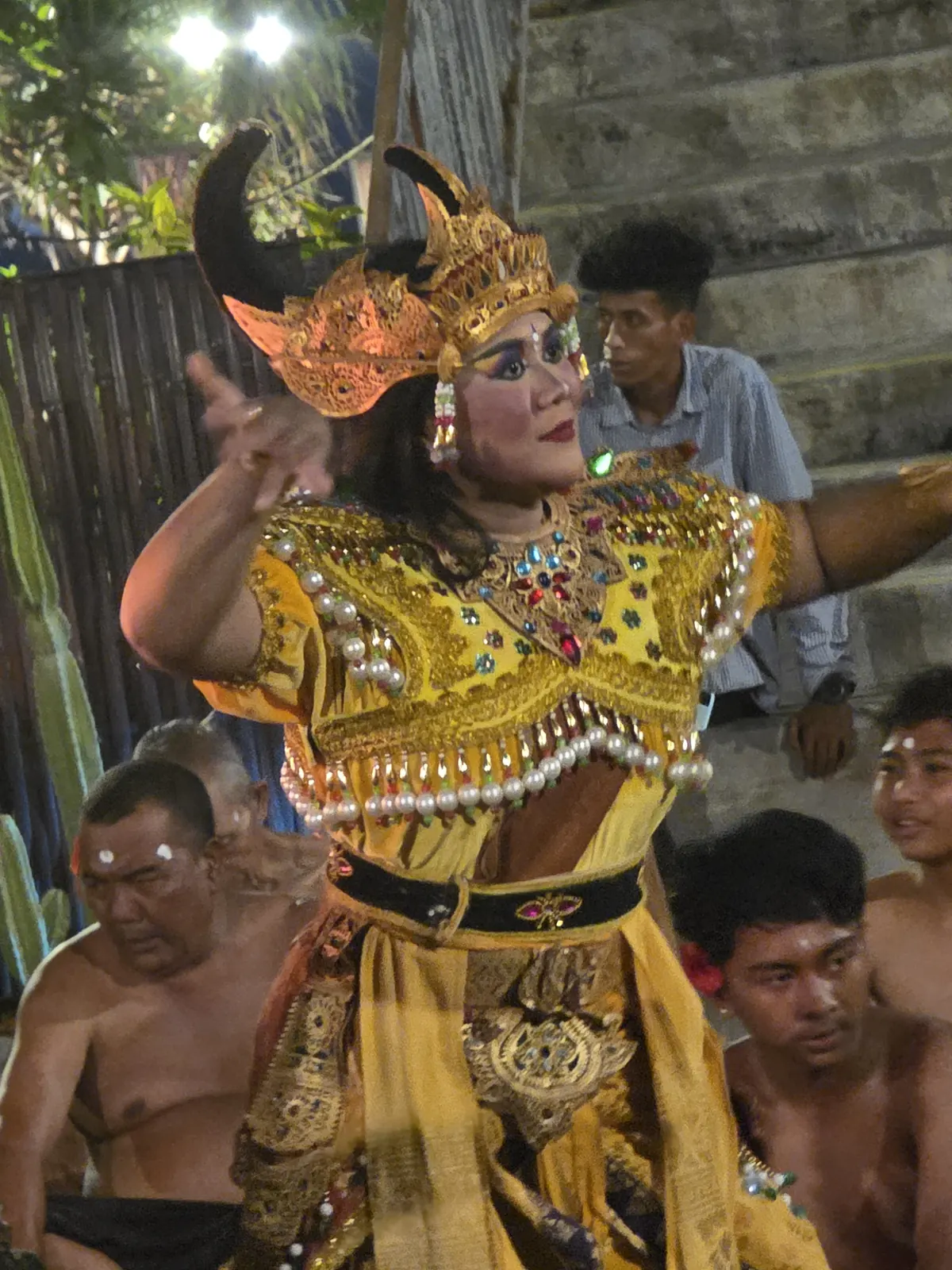
Balinese dancer in full traditional costume performing
The people the platform exists for.
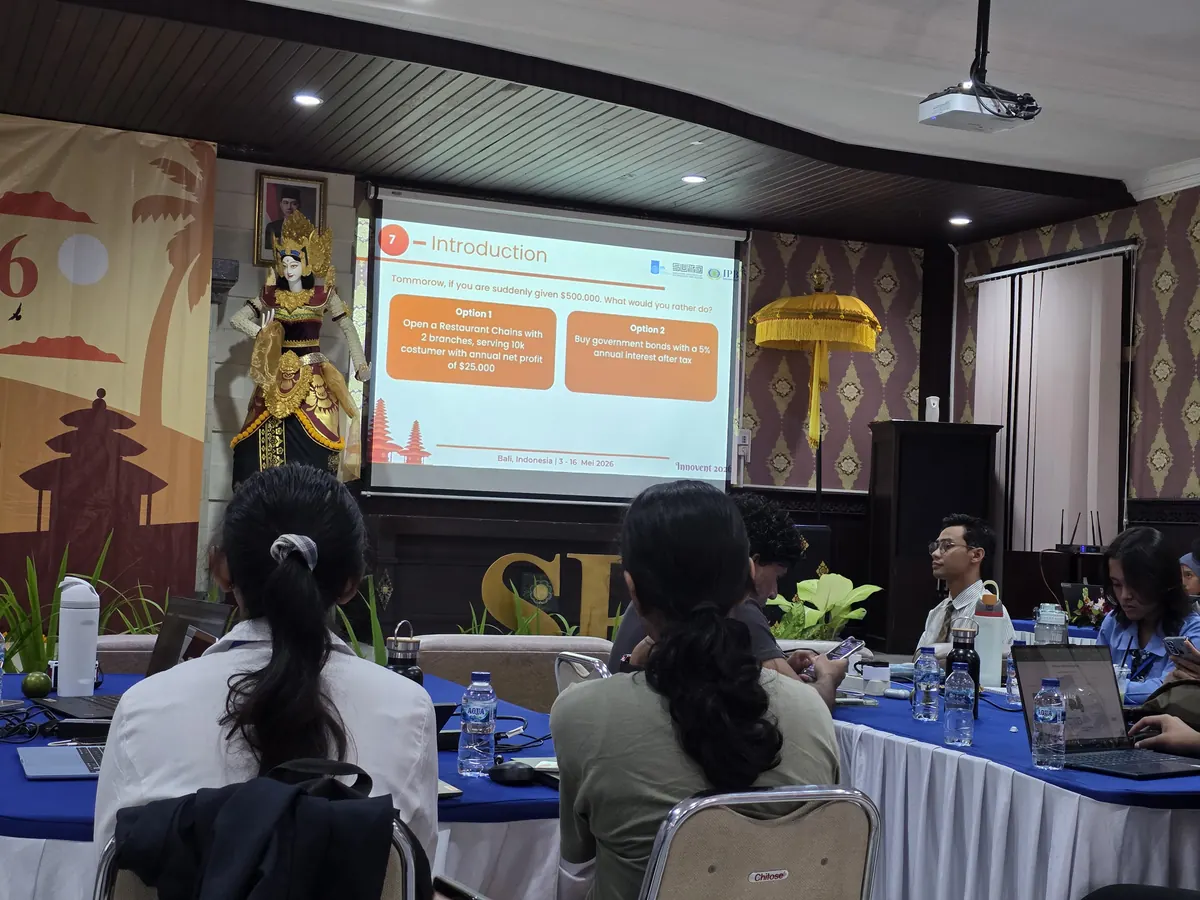
A session in Bali: attendees seated facing a projected slide, with Balinese carvings and a gilded statue in the room
A session on the Indonesian creative industry, Bali.
Market researchBusiness model canvas Cross-cultural teamIndonesia

04 · Product design

SeenScreen

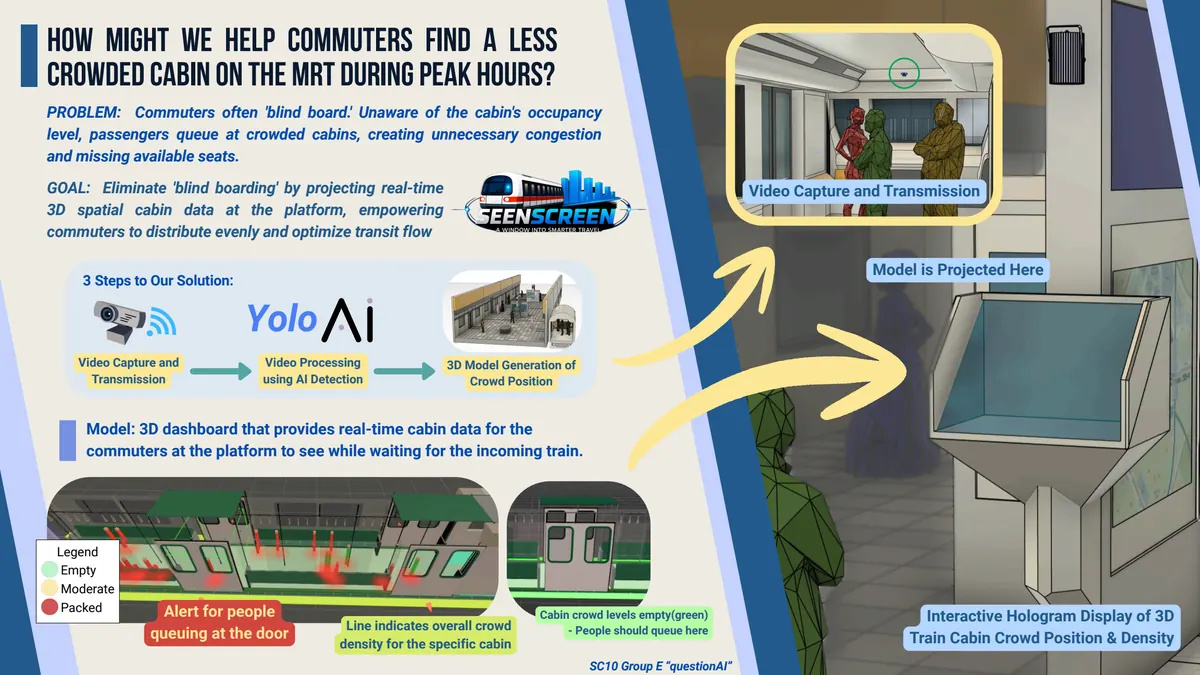
A carriage-occupancy display, so an MRT train fills evenly instead of one cabin at a time.

January – March 2026 03.007B Innovating with Design and AI-2 CAD, product design, posters and slides iDeA showcase

The problem

Commuters "blind board" — they queue where they happen to be standing, so a train leaves the platform with one carriage packed and the next half empty. Nobody is behaving badly; they simply cannot see the information that would change their decision, and the ten seconds in which it would be useful have already passed.

What we built

A camera in the cabin, AI detection to find and classify each passenger as sitting or standing, and a live 3D model of where the crowd actually is — projected as a hologram at the platform, colour-coded from empty through moderate to packed, so you choose your carriage before the doors open.

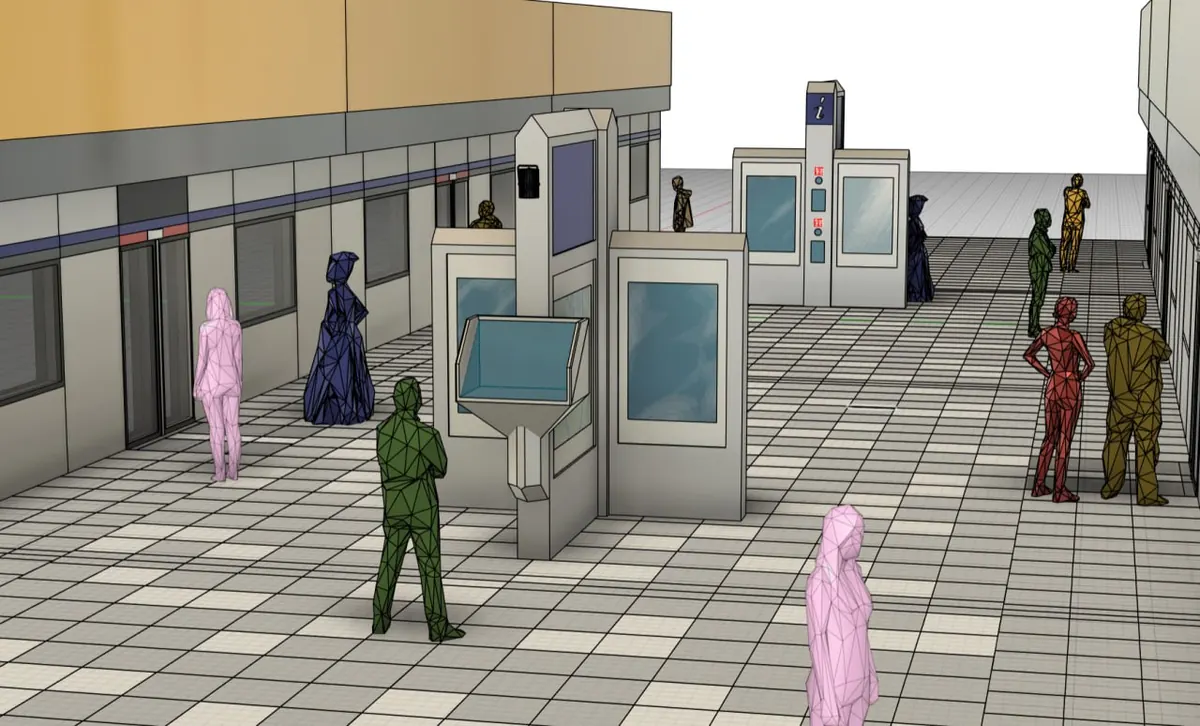
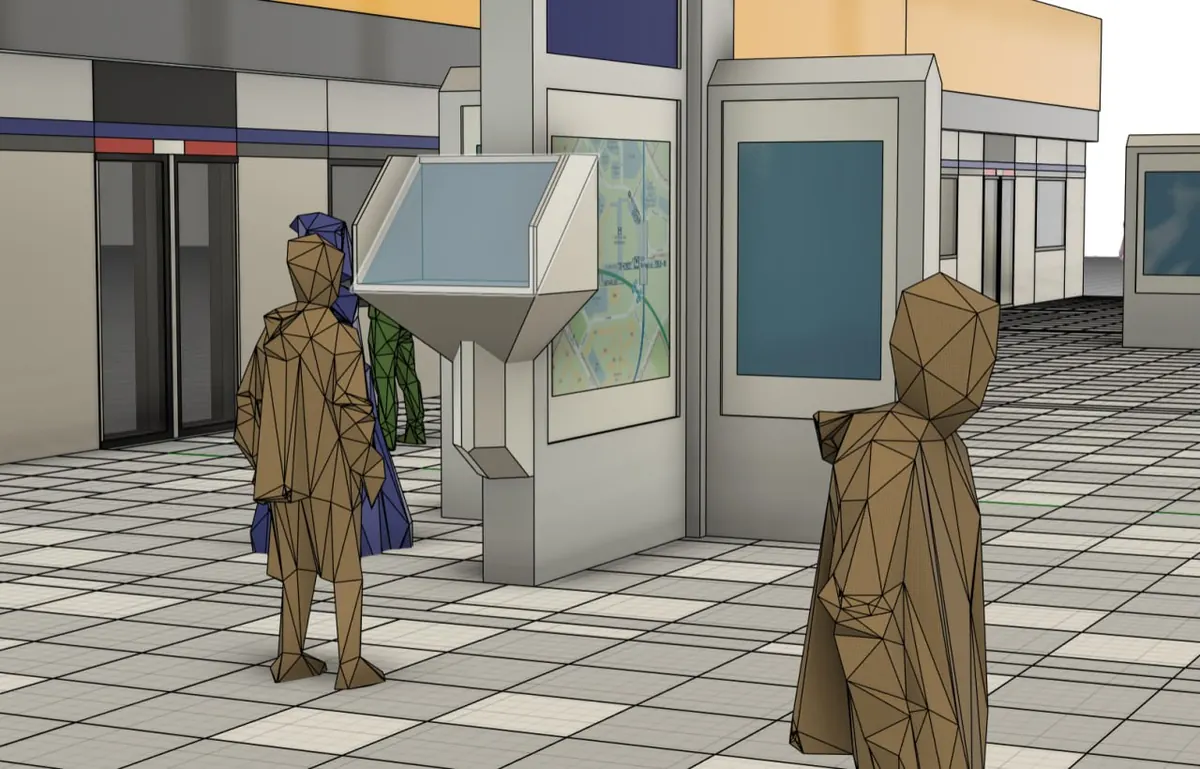
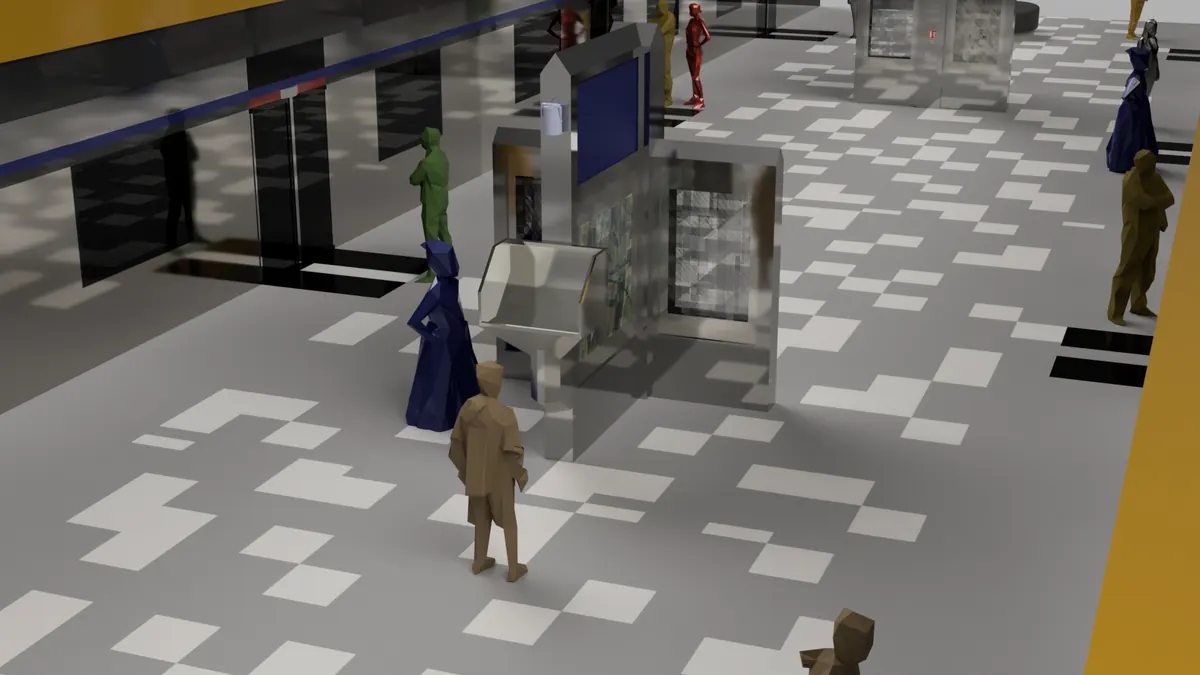
I owned the entire simulated build in CAD — the platform, the display unit, the train — along with the final product design and every poster and slide the team put up.

What I took away

Our detection test ran at nought per cent. A printed diorama against a dark background registered nothing at all; on a white background it was found but read with the wrong posture. The instinct was to go looking for a better model. What actually fixed it was changing what we were showing the camera — printed real people, placed inside the cabin mock-up — which took us to a hundred per cent. When a system fails, the input is worth interrogating before the algorithm is.

Presentation slide setting out the problem, the three-step solution and the hologram display concept
The critical image slide: capture, detect, model, project.
CAD render of the station platform with SeenScreen display units and figures
The platform, built in CAD.
Close CAD render of the angled SeenScreen display unit
The display unit, close up.
Rendered view of the platform with passengers and the display in place
The whole thing, rendered.
CADExhibited Poster & slide designAI detectionIterated to 100%

05 · Deep tech

Decipher

Turning a quantum-computing research paper into a business anyone could fund.

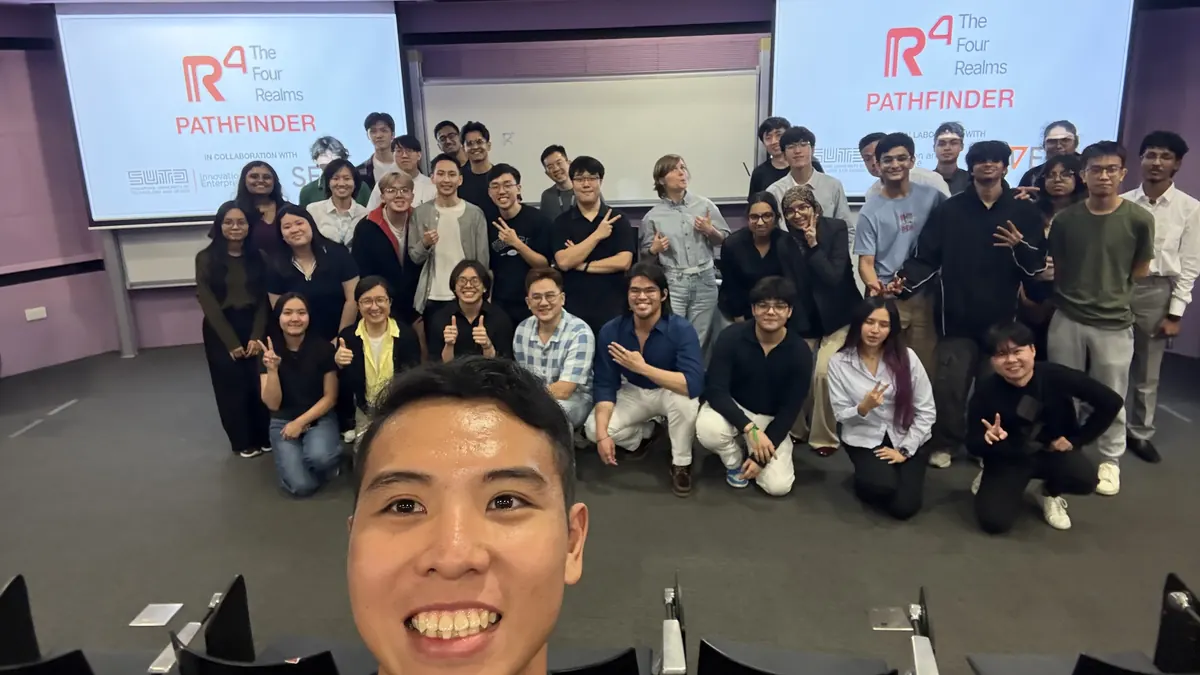
7 – 8 February 2026 PathFinder 2026 · SUTD I&E and SEVEN One of nine teams Team "Point A to B"

The problem

Today's quantum processors are noisy. Before anyone gets a fault-tolerant machine, the noise has to be characterised — you have to know what is going wrong and where it comes from before you can correct it in real time. That is a real research problem with a real paper behind it, and the case handed to us was blunt: this exists in a lab, make it a company.

What we built

A commercialisation strategy, not a prototype. A staged roadmap from TRL 3 to TRL 9 across the three hardware families that matter — superconducting, photonic and trapped-ion — with a separate development package for each, because they fail in different ways. A funding path benchmarked against real commitments in the sector, and a five-year financial plan ending in acquisition. Eight minutes to present it, five for questions, in front of an external mentor, the principal researcher and an industry judge.

What I took away

Two days is not enough time to understand quantum error characterisation, and pretending otherwise in front of the researcher who wrote the paper would have ended badly. What we could do was be precise about the commercial question and honest about the boundary of what we knew. I learned to say "here is what I have verified, and here is where my confidence stops" — and that a judge trusts that answer considerably more than a confident one.

The PathFinder 2026 cohort together in the lecture theatre at the close of the competition
The whole cohort, at the close of two days.
Title slide of the deck: Quantum Computing Error Characterization Software, presented by Point A to B
Our title slide.
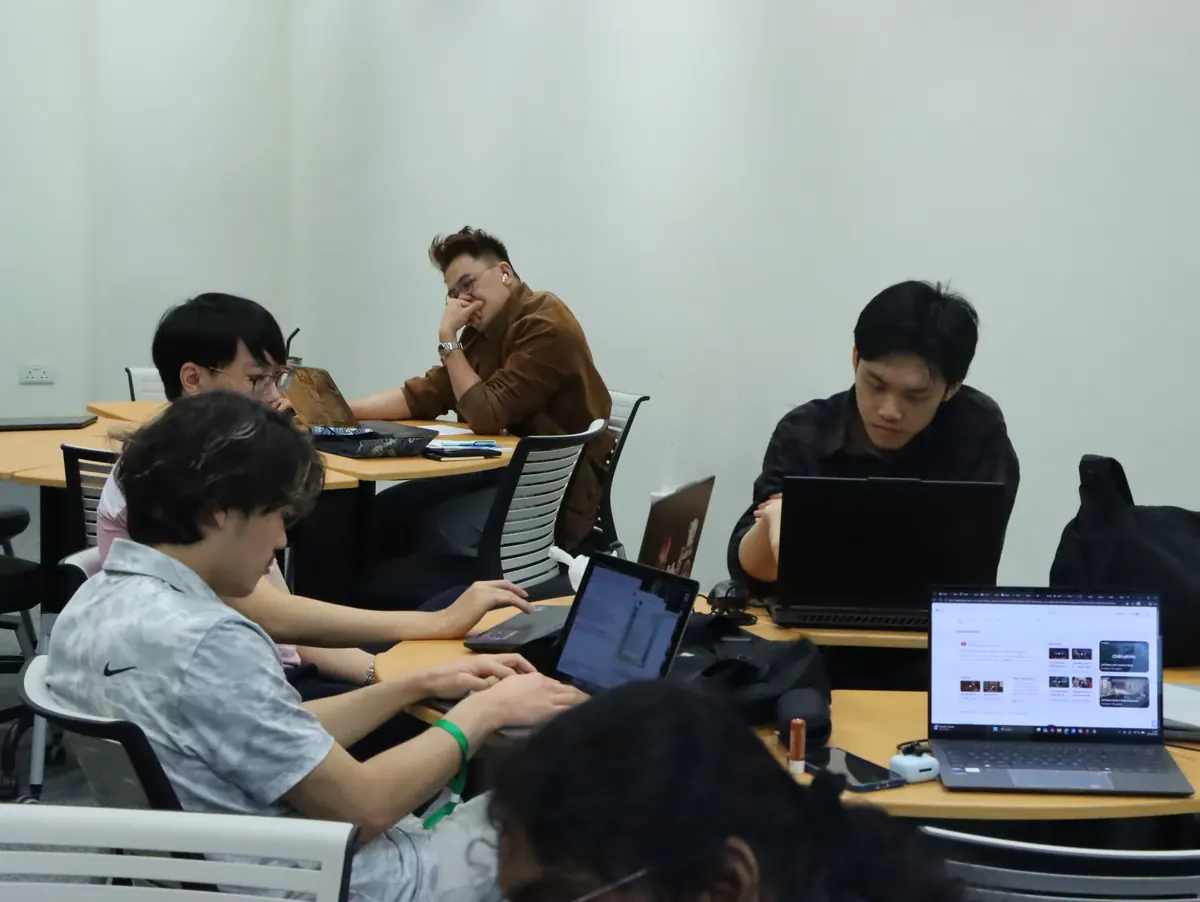
Teams working at laptops in a classroom during the competition
The room, somewhere in the middle of day one.
CommercialisationTRL roadmap Financial modellingJudged pitch

06 · Hackathon

MediSync

A medication reminder for elderly users with no smartphone and no dependable internet.

September 2025 MVP Hackathon, organised by SEVEN at SUTD Team MVP Mavericks Firmware, web app, serial bridge

The problem

In 2024 some 87,200 Singaporeans over 65 lived alone, a figure projected to reach 122,000 by 2030 — around one senior in four. Missed medication and missed appointments are not an inconvenience at that age, and the cases that make the news are the ones where somebody was found far too late. Yet every reminder app on the market assumes a smartphone, an account and a working connection, and the people who most need reminding are the least likely to have all three.

What we built

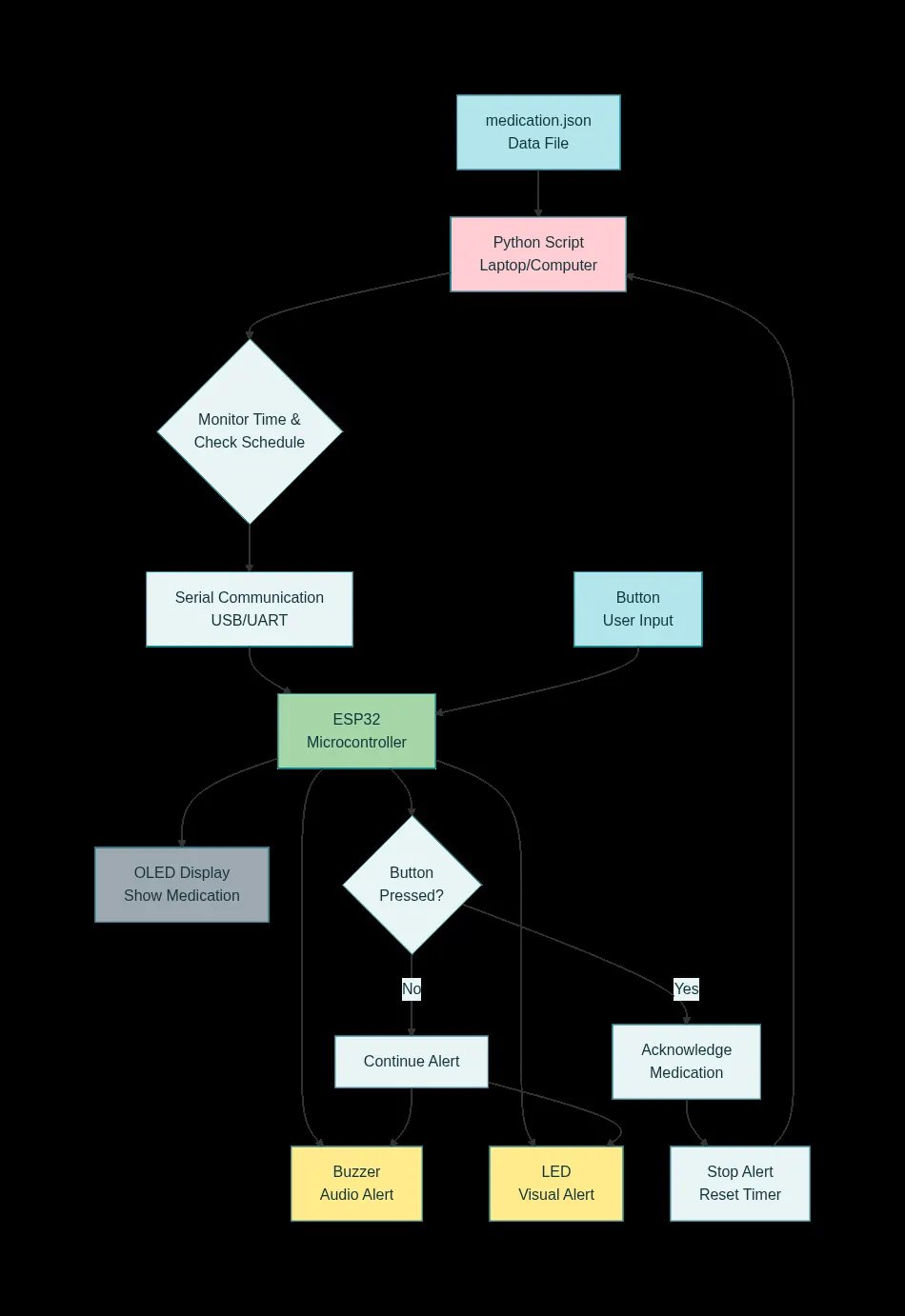
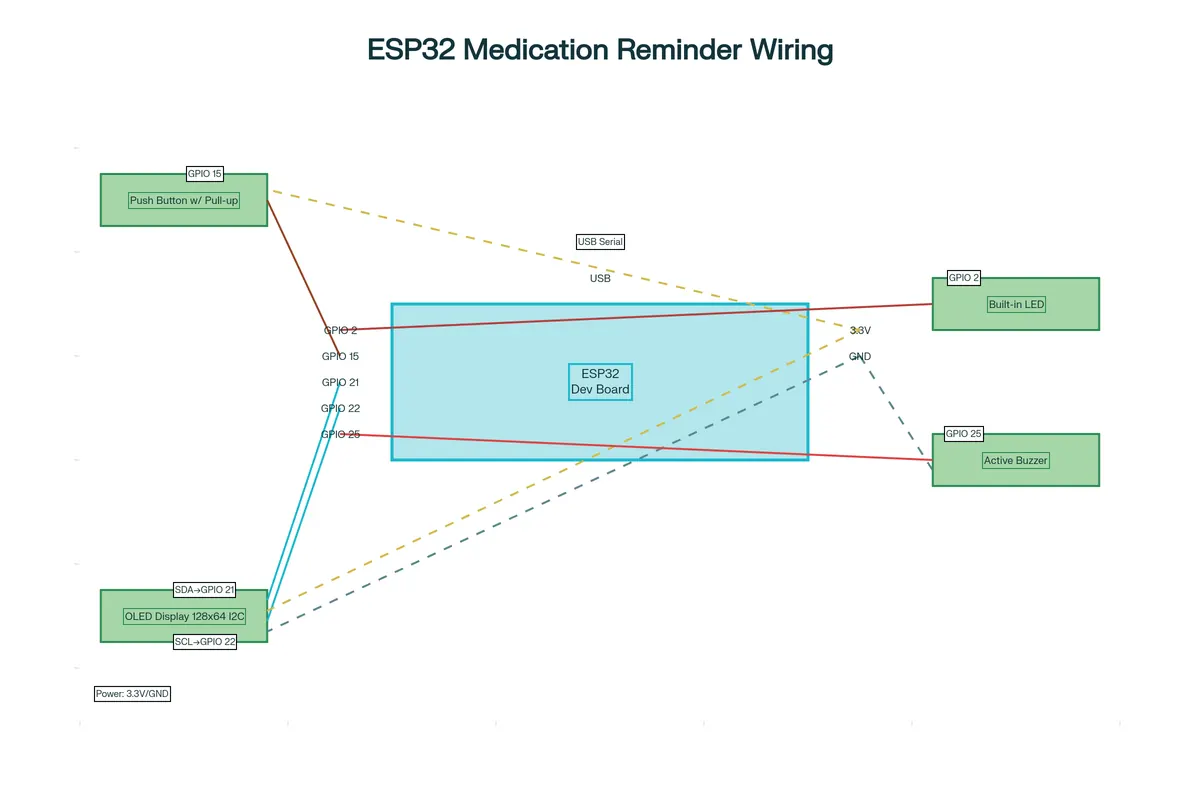
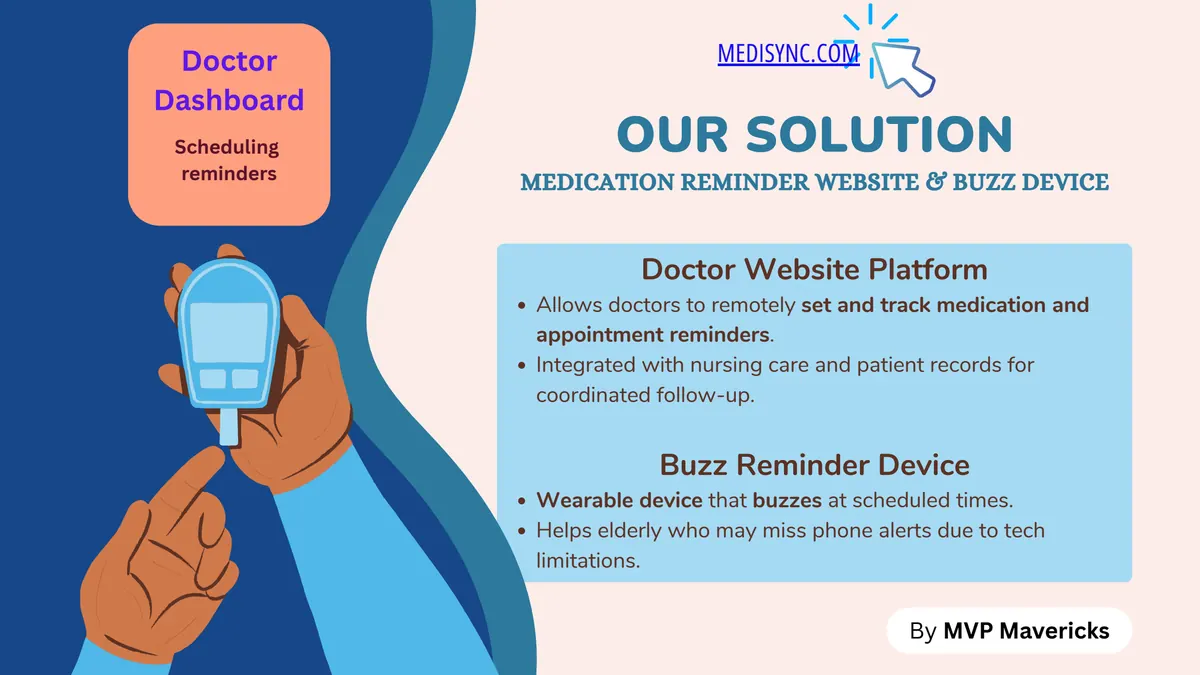
Two halves. A web platform on the doctor's side, where medication and appointment reminders are set and tracked remotely and tie back into nursing care and patient records — and a wearable buzz device on the patient's side, which alerts at the scheduled time and keeps alerting until the button is pressed, because a reminder you can sleep through is not a reminder. An ESP32 holds the schedule and drives the display and the alert; a serial bridge over USB carries the schedule across.

What I took away

The bridge did not survive the device's memory budget, and it failed during the demonstration — in front of the room, at the worst possible moment. We diagnosed it live rather than talking over it. I have since stopped treating the constrained part of a system as something to integrate last; on a microcontroller, the memory budget is the design, and everything else negotiates with it.

System architecture flowchart from the scheduling script through the ESP32 to the display and button
System architecture — schedule in, alert out, acknowledgement back.
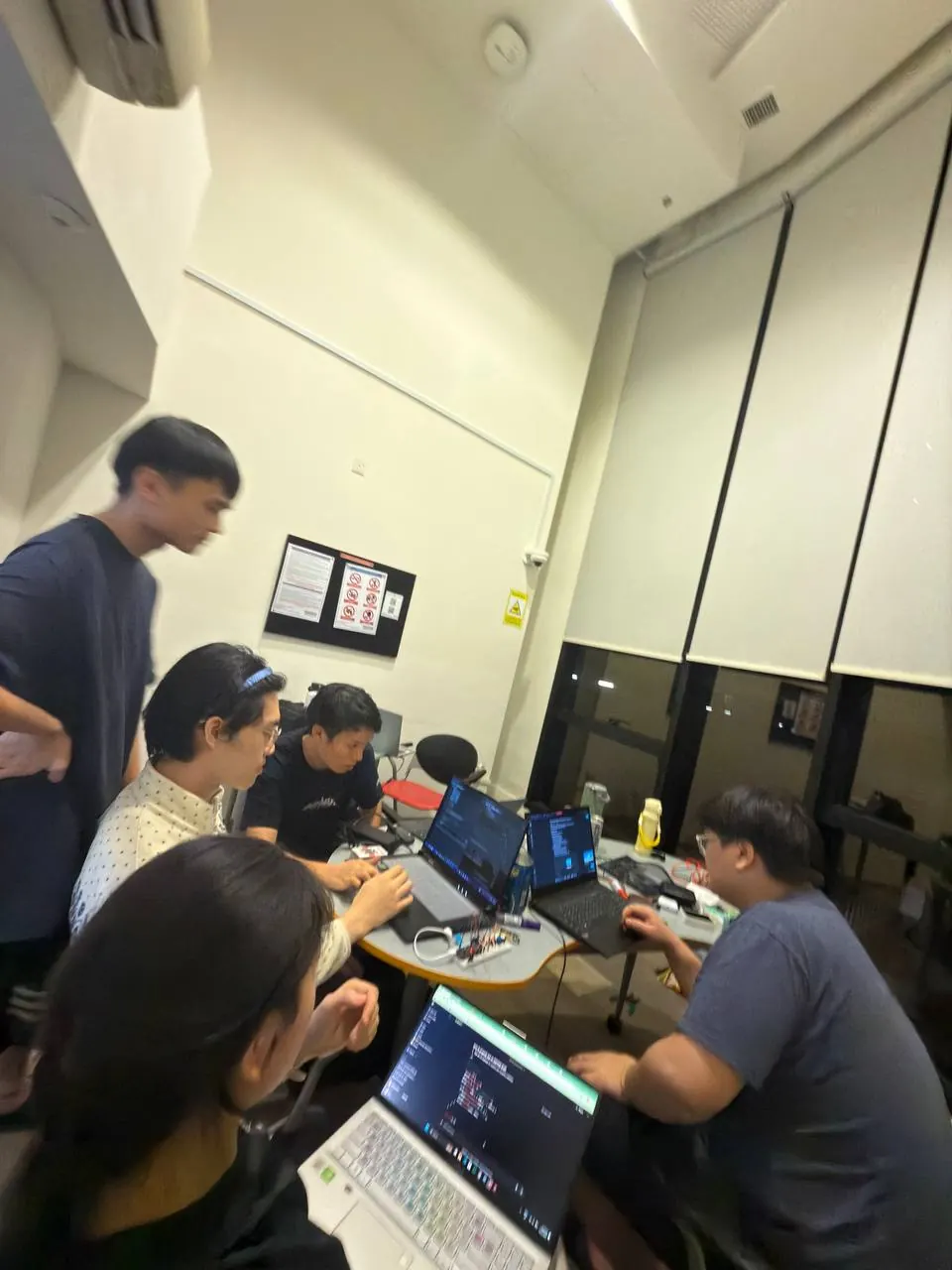
The team working on laptops in a room during the hackathon
Build night.
ESP32 wiring diagram for the medication reminder
ESP32 wiring.
Presentation slide describing the doctor website platform and the buzz reminder device
The solution slide — doctor platform on one side, buzz device on the other.
ESP32Accessibility constraint Failed publiclyDiagnosed live

Next

More coming

Competitions, music, photography and a straight account of how I work with AI tools are being written next. If you want the short version in the meantime, the about page covers it, or you can just email me.