The problem
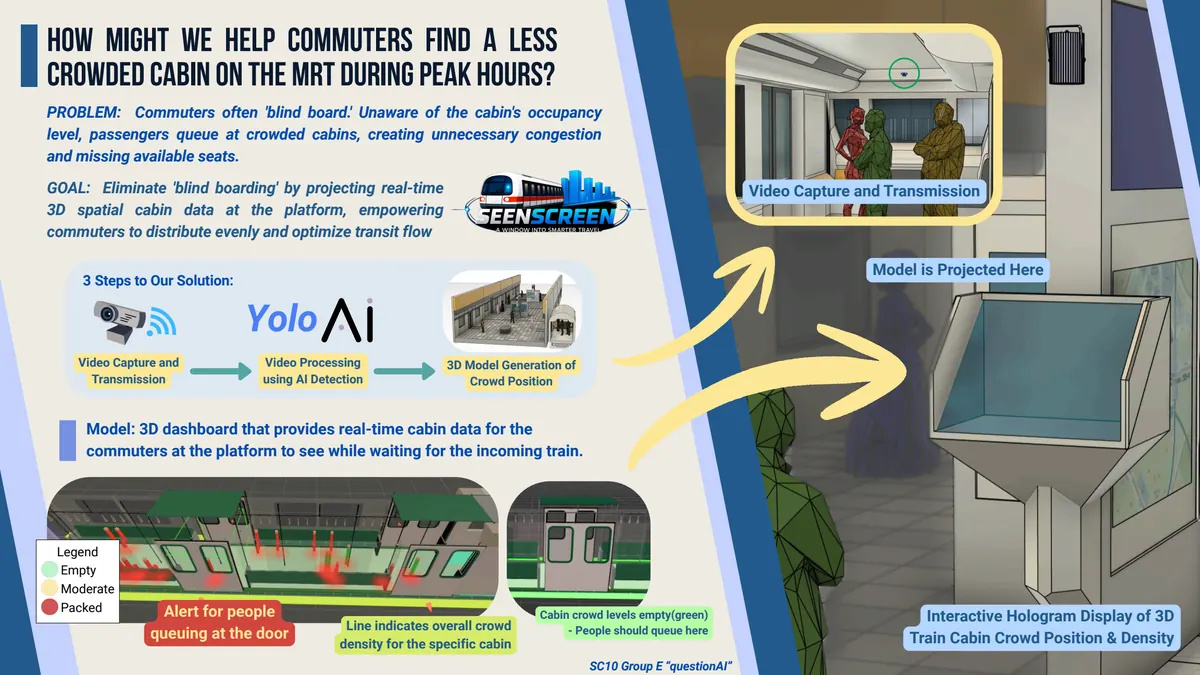
Commuters "blind board" — they queue where they happen to be standing, so a train leaves the platform with one carriage packed and the next half empty. Nobody is behaving badly; they simply cannot see the information that would change their decision, and the ten seconds in which it would be useful have already passed.
What we built
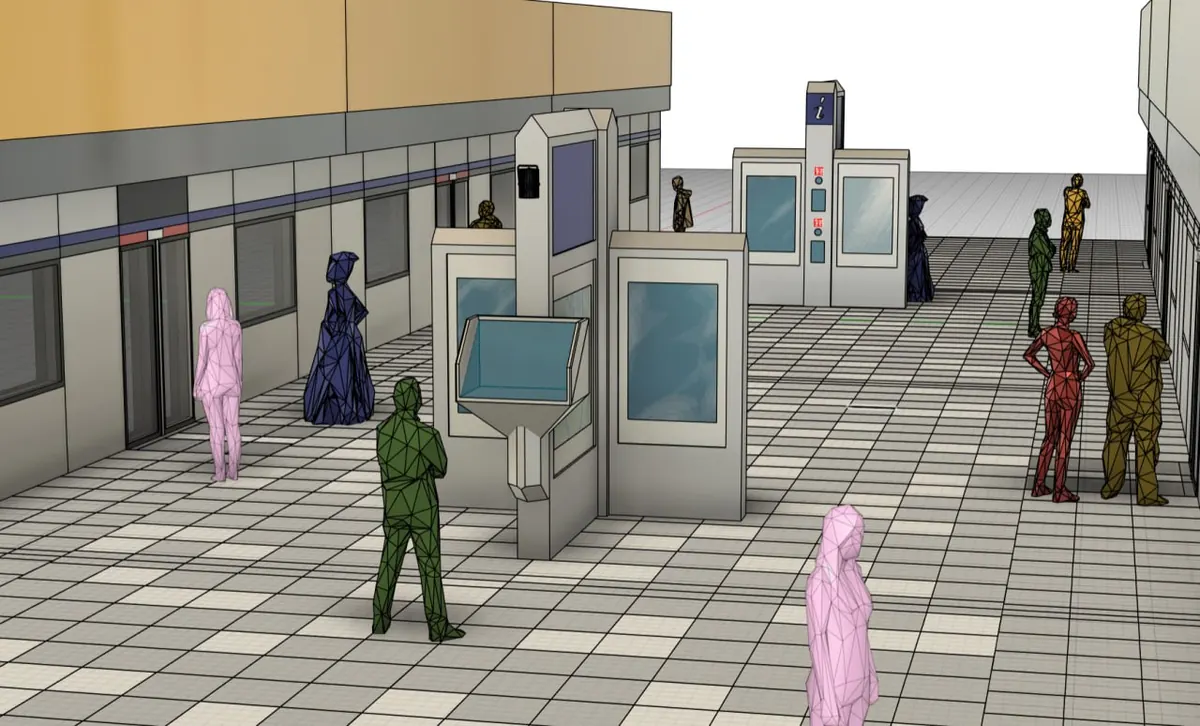
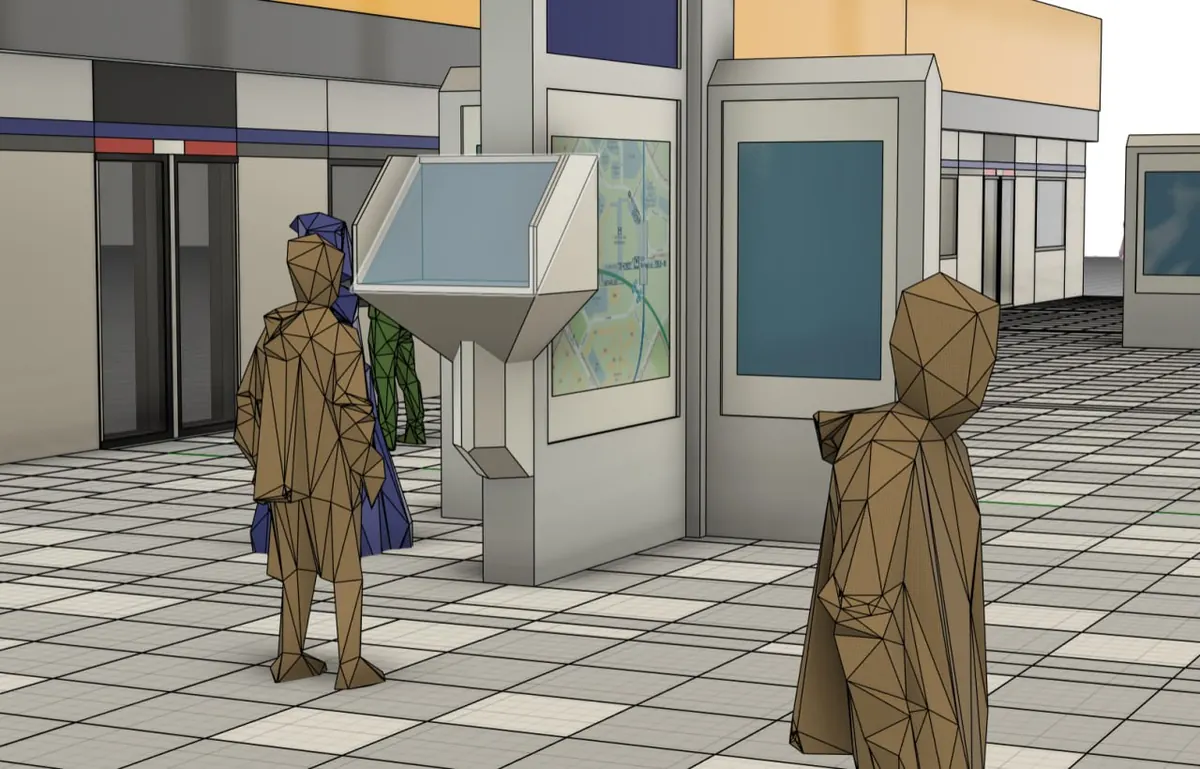
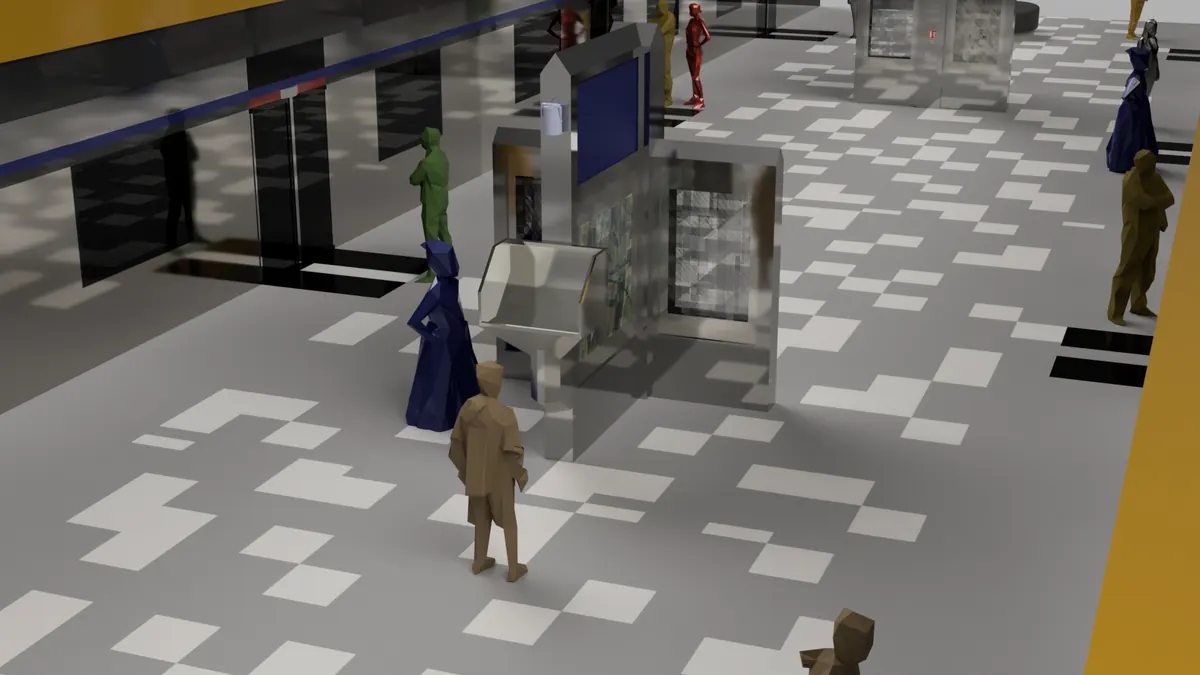
A camera in the cabin, AI detection to find and classify each passenger as sitting or standing, and a live 3D model of where the crowd actually is — projected as a hologram at the platform, colour-coded from empty through moderate to packed, so you choose your carriage before the doors open.
I owned the entire simulated build in CAD — the platform, the display unit, the train — along with the final product design and every poster and slide the team put up.
What actually fixed it
Our detection test ran at nought per cent. A printed diorama against a dark background registered nothing at all; on a white background it was found but read with the wrong posture. The instinct was to go looking for a better model. What actually fixed it was changing what we were showing the camera — printed real people, placed inside the cabin mock-up — which took us to a hundred per cent. When a system fails, the input is worth interrogating before the algorithm is.