The problem
Today's quantum processors are noisy. Before anyone gets a fault-tolerant machine, the noise has to be characterised — you have to know what is going wrong and where it comes from before you can correct it in real time. That is a real research problem with a real paper behind it, and the case handed to us was blunt: this exists in a lab, make it a company.
What we built
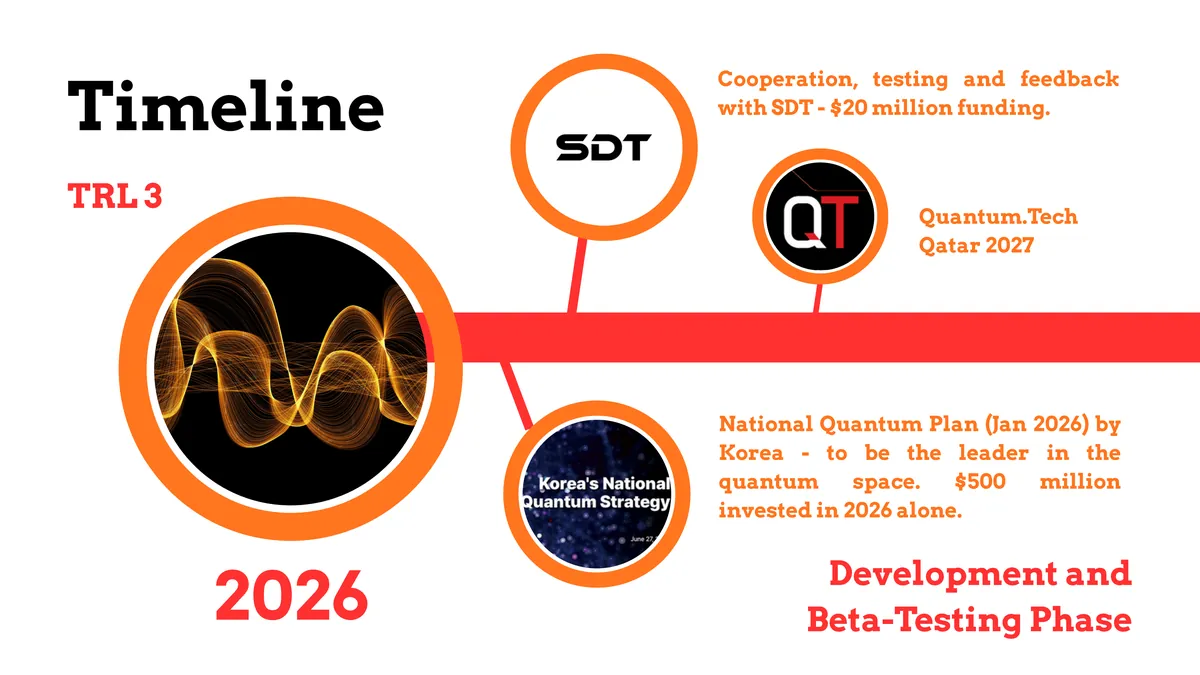
A commercialisation strategy, not a prototype. A staged roadmap from TRL 3 to TRL 9 across the three hardware families that matter — superconducting, photonic and trapped-ion — with a separate development package for each, because they fail in different ways. A funding path benchmarked against real commitments in the sector, and a five-year financial plan ending in acquisition. Eight minutes to present it, five for questions, in front of an external mentor, the principal researcher and an industry judge.
What I learned to say
Two days is not enough time to understand quantum error characterisation, and pretending otherwise in front of the researcher who wrote the paper would have ended badly. What we could do was be precise about the commercial question and honest about the boundary of what we knew. I learned to say "here is what I have verified, and here is where my confidence stops" — and that a judge trusts that answer considerably more than a confident one.