The problem
In 2024 some 87,200 Singaporeans over 65 lived alone, a figure projected to reach 122,000 by 2030 — around one senior in four. Missed medication and missed appointments are not an inconvenience at that age, and the cases that make the news are the ones where somebody was found far too late. Yet every reminder app on the market assumes a smartphone, an account and a working connection, and the people who most need reminding are the least likely to have all three.
What we built
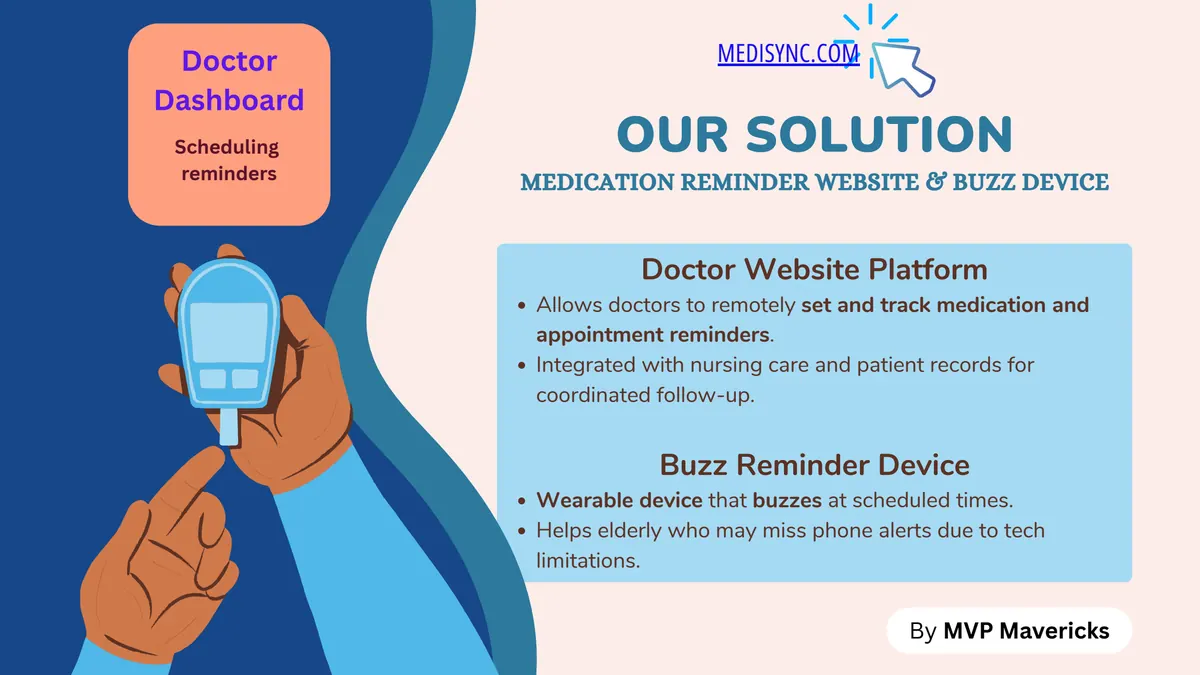
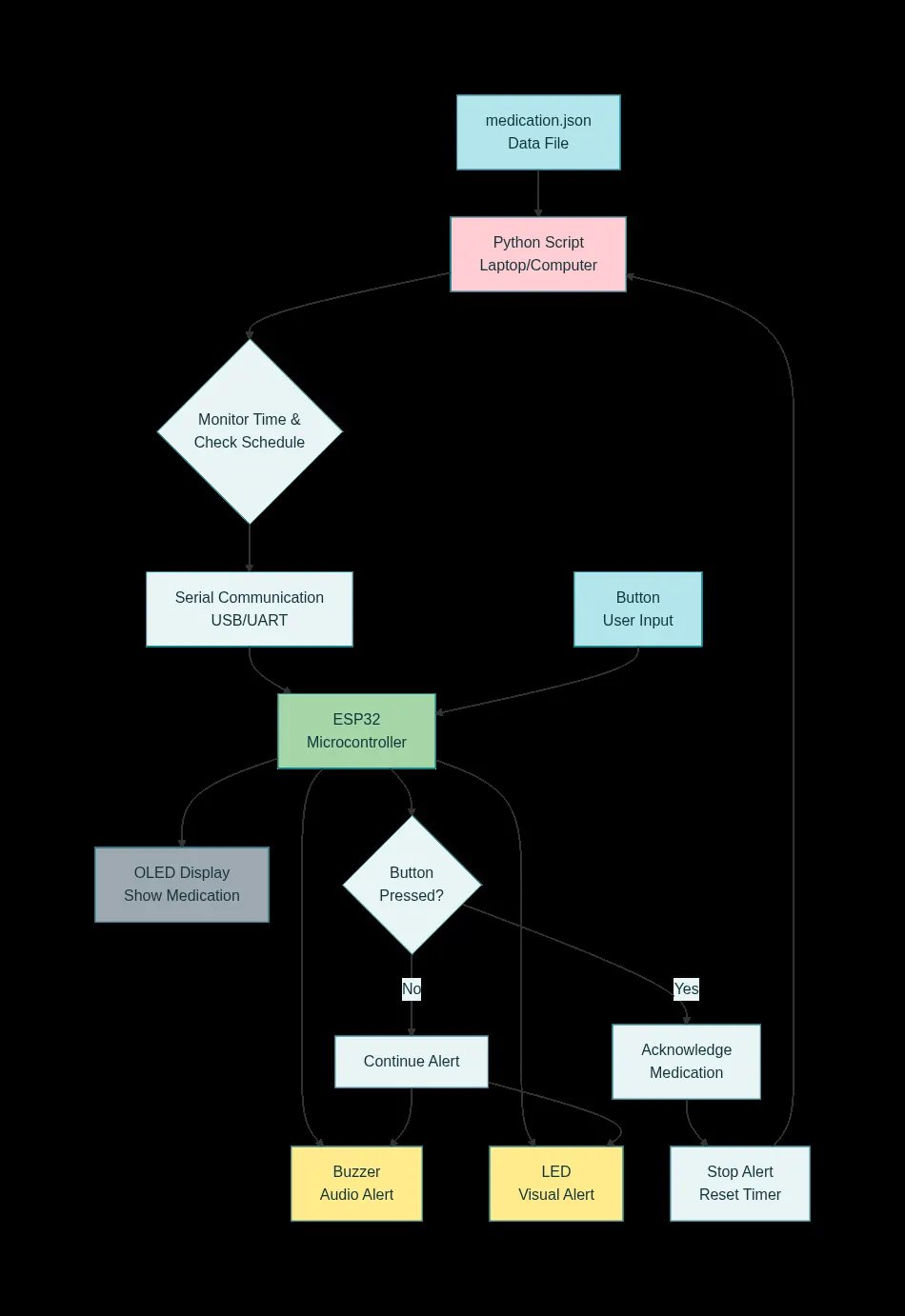
Two halves. A web platform on the doctor's side, where medication and appointment reminders are set and tracked remotely and tie back into nursing care and patient records — and a wearable buzz device on the patient's side, which alerts at the scheduled time and keeps alerting until the button is pressed, because a reminder you can sleep through is not a reminder. An ESP32 holds the schedule and drives the display and the alert; a serial bridge over USB carries the schedule across.
What I do differently now
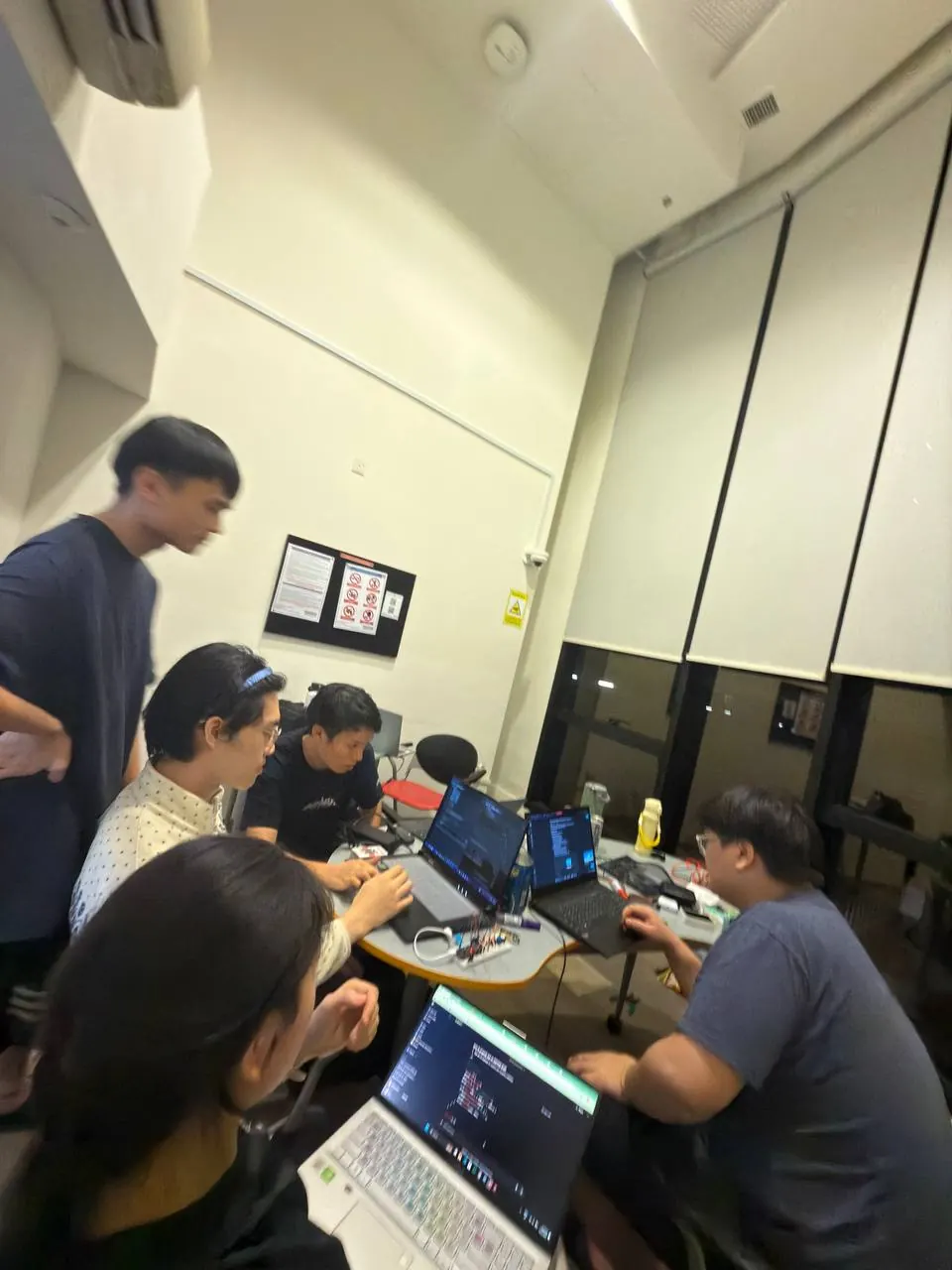
The bridge did not survive the device's memory budget, and it failed during the demonstration — in front of the room, at the worst possible moment. We diagnosed it live rather than talking over it. I have since stopped treating the constrained part of a system as something to integrate last; on a microcontroller, the memory budget is the design, and everything else negotiates with it.