The problem
Bali received close to seven million foreign arrivals last year and tourism accounts for roughly a third of the province's economy, yet the performers who supply a great deal of what those visitors come to see have no infrastructure at all. Instagram is the discovery layer. WhatsApp is the contract. Cash is the payment processor. There is no registry of performers anywhere in the country, and middlemen take thirty to forty per cent of a fee for closing a gap that a directory would close for free.
What we designed
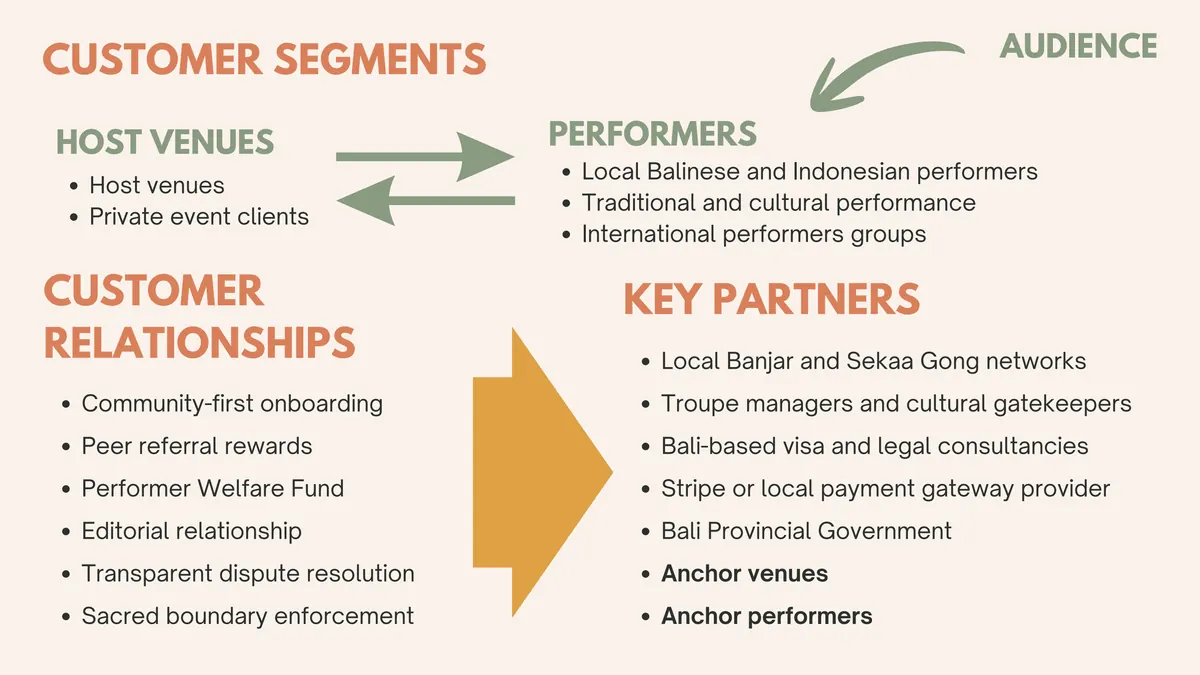
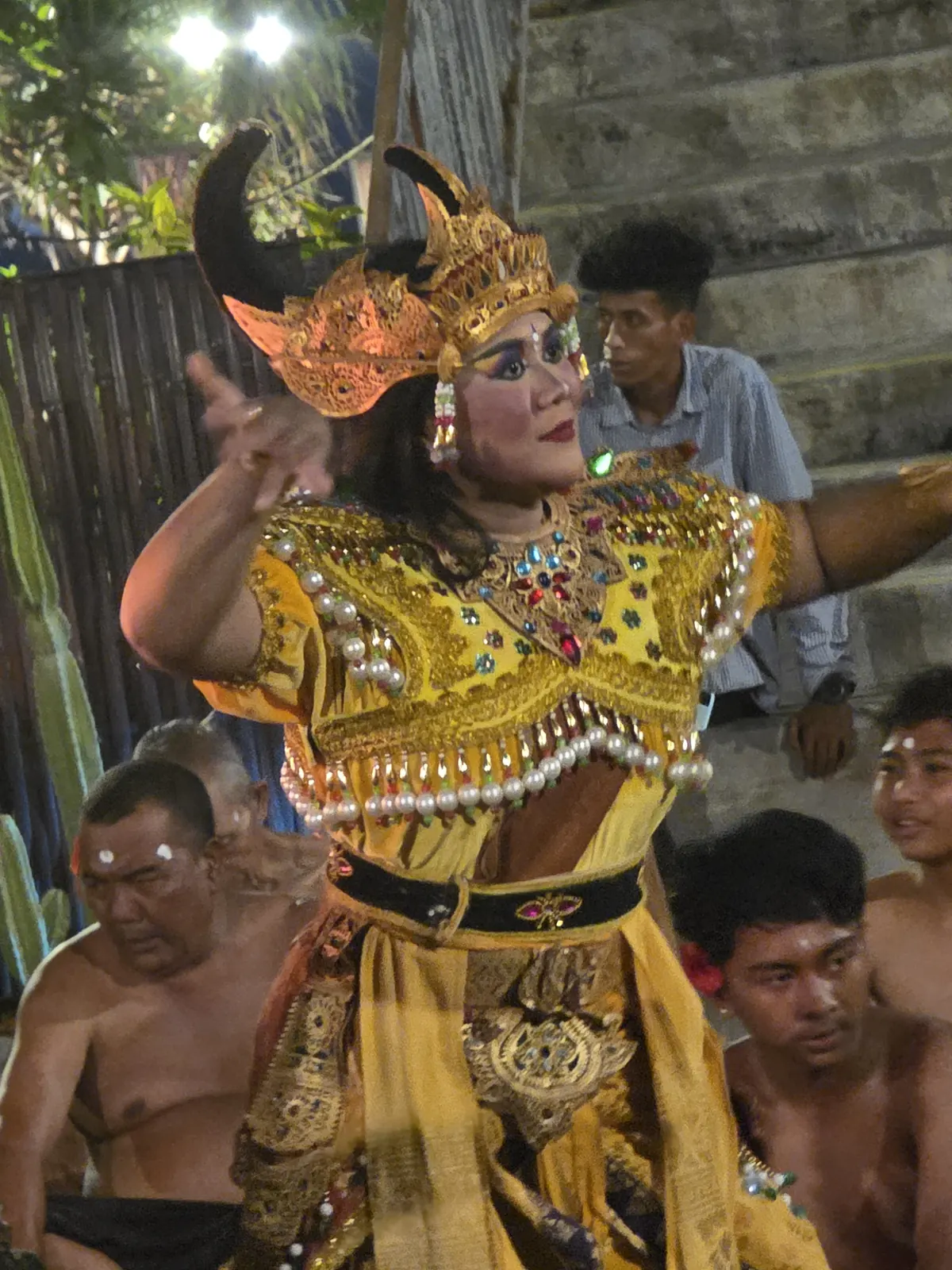
A three-sided marketplace connecting performers, host venues and private event clients, with the commercial model worked through properly: onboarding through the existing Banjar and Sekaa Gong networks rather than around them, a performer welfare fund, transparent dispute resolution — and, the part I argued hardest for, boundaries that performers set themselves. Some pieces are sacred and are not for a hotel lobby. The platform has to be able to encode that refusal, or it becomes another middleman wearing better clothes.
What changed in how I design
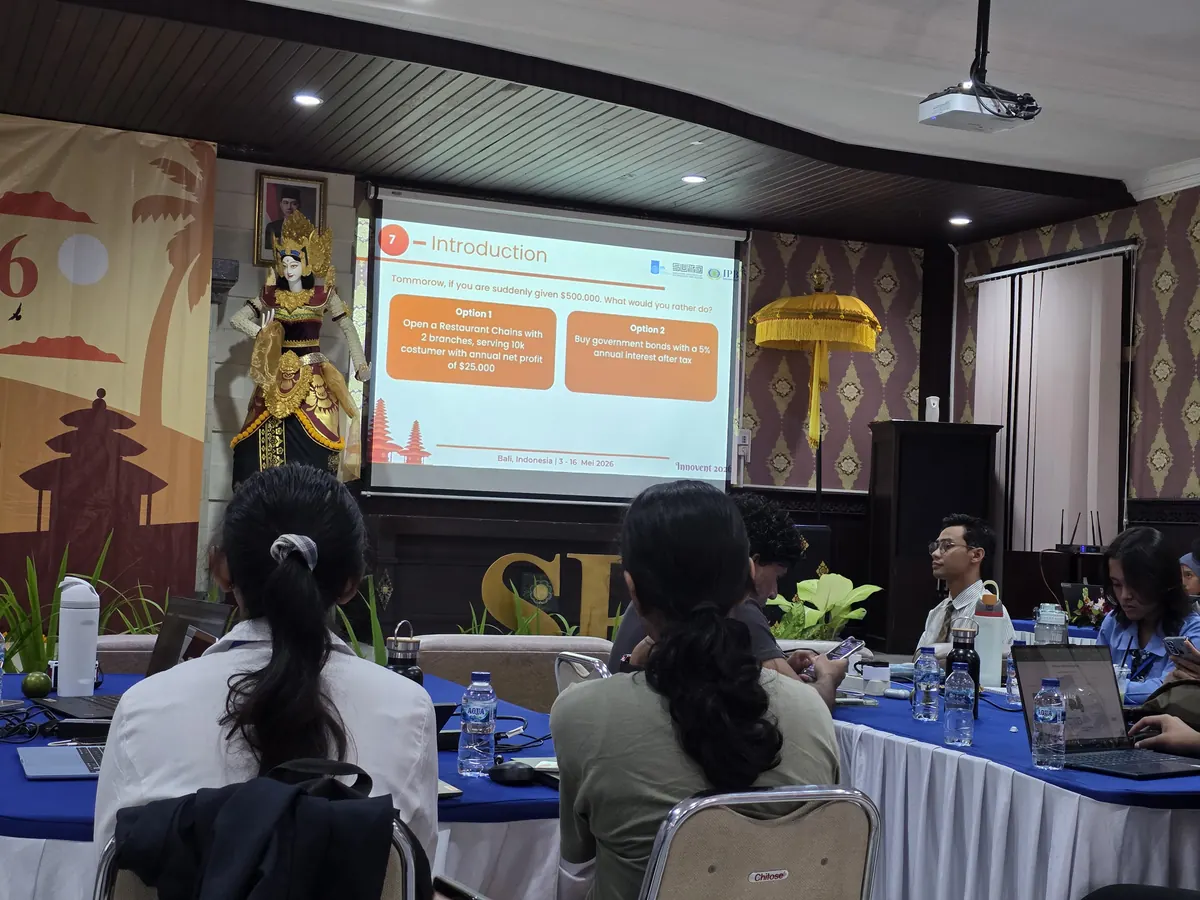
I was the bridge on this team, translating Western-framed proposals to my Indonesian groupmates and their reasoning back again — and discovering that I was doing it for a country I thought I already knew. Seeing Indonesia through a visitor's eyes changed which assumptions I trusted. It also taught me that disagreements survive better when they are handled slowly: every dispute we had was settled calmly, and none of them cost us a day.